What Size Standby Generator Does a Northern Wisconsin Home Need?
Quick Answer: Most Northwoods homes fall somewhere between 10kW and 22kW, depending on whether the goal is covering the essentials or running the entire house at once. Essential-circuit coverage, the refrigerator, well pump, sump pump, lighting, and furnace blower, typically starts around 10kW to 14kW. Whole-house coverage that keeps central air, an electric range, and every circuit live at the same time usually calls for 20kW to 22kW or more. The number that matters most isn't the generator's rating by itself. It's how that rating compares to the starting wattage of the home's biggest motors, especially a submersible well pump or a heat pump compressor, since a motor's starting draw can run two to three times higher than its running draw. None of these figures replace a licensed electrician's load calculation of the actual panel, but they're the range most homeowners in Oneida and Vilas County should expect to hear.
Just after 9 a.m. on a Monday morning this past July, Wisconsin Public Service crews were working to restore power to more than 5,000 homes across Oneida County alone. Thousands more sat dark in Vilas County as a line of severe storms rolled through the Northwoods. By evening, the utility had that number down to roughly 1,100 outages in Oneida County and 3,800 in Vilas County. For the homes still waiting, the outage had already stretched through a full workday. A family with a generator matched to their actual electrical panel felt that stretch as an inconvenience. A family with a generator sized off a guess, or with no generator at all, may have watched a basement flood, a freezer full of food spoil, or a well run dry of pressure.
Sizing a standby generator is the step homeowners skip past fastest. And it's the one that decides whether the unit earns its keep during the next multi-day outage or trips a breaker the first time the well pump and the furnace both ask for power at once.
Essential Circuits vs. Whole-House Coverage: What Each One Actually Means
Generator sizing starts by splitting a home's load into tiers. Essentials, the refrigerator, Wi-Fi router, chargers, and lighting, are non-negotiable during an outage. Comforts like a microwave or window air conditioner make up a second tier. The heaviest draws, central air, an electric range, and a dedicated well pump, separate essential coverage from whole-house systems.
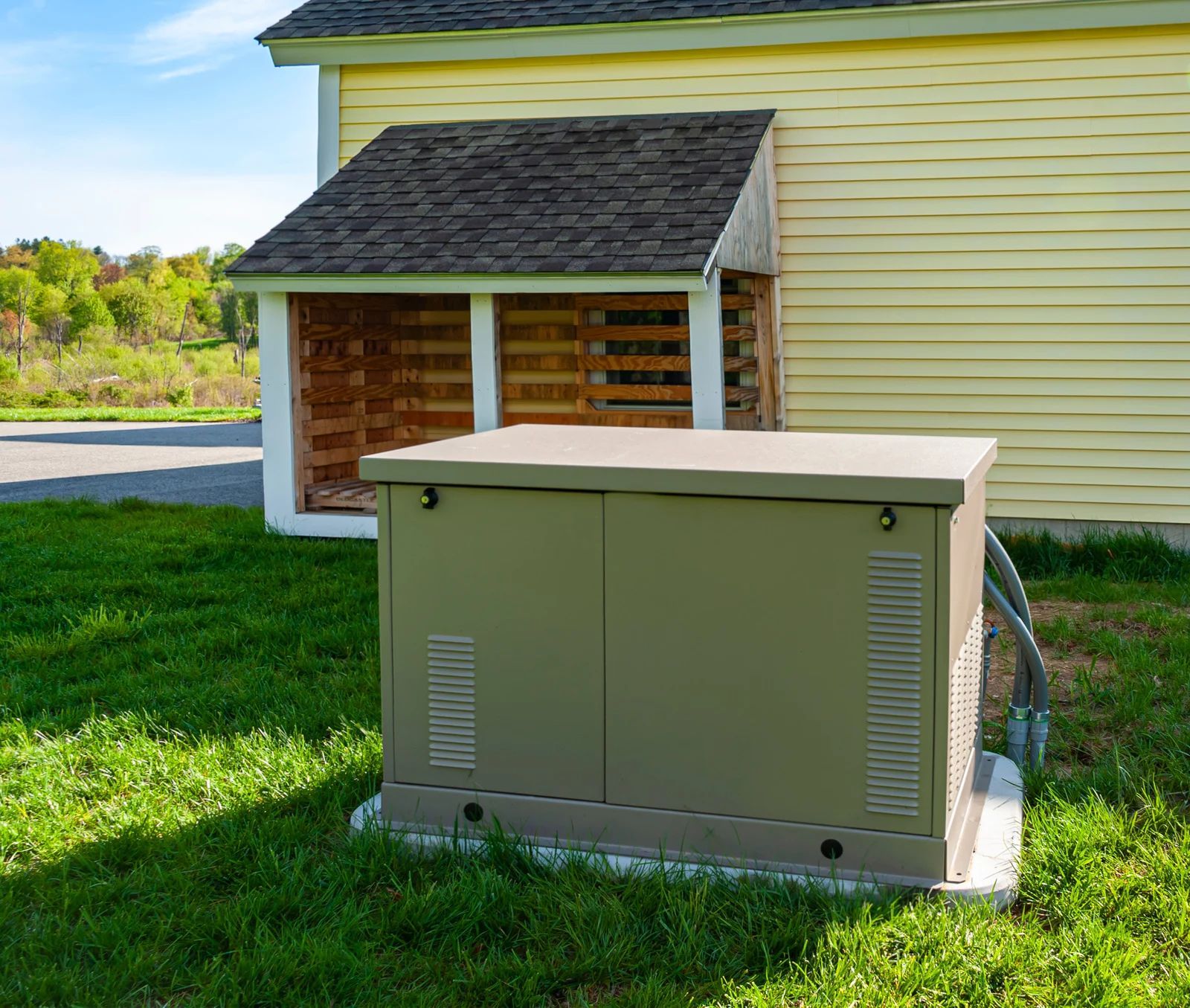
Generac's air-cooled home standby line runs from 10kW to 28kW. Where a home lands depends far more on which tiers it needs running than on square footage. A 1,550-square-foot home typically needs 10kW to 14kW for essentials, while a home near 2,000 square feet usually lands in the 18kW to 22kW range.
Square footage is a starting point, not the final answer. Two identical floor plans can need generators with an 8kW gap or more, since the real number depends on heating type, how many motors start together, and what the household considers essential. A home with gas heat and municipal water asks far less than one with a heat pump and private well.
Why the Well Pump Changes the Math
Every motor in a home needs a heavier jolt of current to start than to keep running. That surge wattage typically runs two to three times higher than steady running wattage. A 3-ton air conditioner draws 3.5kW to 5kW running, but its compressor can demand 15kW to 18kW to start.
A submersible well pump behaves the same way, needing an outsized jolt to overcome the standing water column above it. An electrician's formula states total kW equals the running wattage of every circuit that stays live, plus the single largest starting burst, the part sizing most often gets badly wrong.
Tip: Before scheduling a site survey, walk your own panel and separate the circuits you'd consider non-negotiable during a multi-day outage from the ones that are just nice to have. That list, more than the square footage of the house, is what tells an electrician whether a 14kW unit will do the job or a 22kW unit is the safer call.
Load Management: How a Mid-Sized Generator Can Cover a Big Panel
Buying the largest generator on the lot, just in case every appliance starts at once, is understandable but usually unnecessary. That worst-case moment almost never happens in a real home, and building a system around it means paying more upfront and more every time the generator runs.
Load management solves this more efficiently. A load manager watches the generator's output and pauses a lower-priority circuit for a few seconds if two heavy loads threaten to overload the system. Newer units operate wirelessly, lowering installation complexity. A soft-start kit softens a compressor's surge directly, allowing a smaller generator.
Pair a right-sized generator with load management, and the household gets a system that costs less to buy and less to run over its lifetime. Every circuit stays available when it's actually needed, instead of something being permanently switched off just to save money on the unit itself.
Choosing a Fuel Source for Reliable Cold-Weather Starts
Sizing gets most of the attention, but fuel choice decides whether that generator starts on the coldest night of the year. Propane is the fuel most Northwoods installations run on, since it starts in seconds regardless of temperature and doesn't gum up or thicken the way gasoline and diesel can.
Diesel behaves differently once temperatures drop. It starts to gel at or below 20 degrees Fahrenheit as paraffin wax crystallizes, and can gel completely below negative 10 degrees within 48 hours. Keeping a diesel system reliable through winter means winter-blend fuel, additives, or heated storage, an upkeep cost many homeowners underestimate.
Natural gas offers unlimited run time near village centers, but most Northwoods properties along the lakes have no gas service at all. That makes propane the practical default. An on-site tank, refillable and unaffected by an outage, is what keeps a standby system running through an extended winter storm.
What a Licensed Electrician Actually Calculates
A generator's kW rating only means something once it's checked against the specific panel it needs to serve. That check is what a proper load calculation covers. The optional standby systems provisions of the National Electrical Code exist for exactly this kind of installation, and they call for the running and starting demand of every circuit intended to stay live during an outage to be tallied against what the generator and the home's wiring can actually carry, not estimated from a chart. A professional site survey measures the real loads at the panel rather than working backward from square footage, which is exactly why two homes of the same size can end up with generators eight or more kW apart. It also confirms permit and inspection requirements with the local jurisdiction, since a standby
generator installation in Oneida or Vilas County goes through the same permitting process as any other permanent electrical work tied to the home's service panel.
Sizing for a Seasonal Cabin vs. a Year-Round Home
A cabin closed up for half the year has different priorities than a house lived in every month. For a seasonal property, the generator's job during an outage is often narrower: keep the sump pump running, keep pipes from freezing, and keep the refrigerator and a few lights alive until someone can get up to check on the place. A 10kW to 14kW unit frequently covers that scope without trouble, unless the cabin has since been winterized with electric heat or upgraded for year-round living, in which case its power needs start to look more like a full-time home's.
A year-round home doesn't get that flexibility. When the furnace, boiler, or heat pump depends on electricity to run, even just the ignition and blower components on a propane-fired system, a multi-day outage in a Northern Wisconsin January isn't a comfort issue. It's a frozen-pipe risk. That's the case where whole-house coverage, or at minimum a unit sized well above bare essentials, earns its cost even in a home with a modest footprint.
Warning: A standby generator installed without a code-compliant automatic transfer switch can backfeed electricity onto the same utility lines a crew is working to restore, putting line workers at real risk of electrocution. That's not a place to cut corners on installation cost. Permitted, professionally installed transfer equipment exists specifically to keep that from happening.
Frequently Asked Questions
What size generator do most Northern Wisconsin homes actually need?
Most Oneida and Vilas County homes fall between 10kW and 22kW. Essential-circuit coverage typically needs 10kW to 14kW, while whole-house coverage with central air and every circuit running usually calls for 20kW to 22kW, depending on wiring and heating.
Will a 14kW generator run my well pump and furnace at the same time?
It depends on the well pump's starting wattage and what else draws power at that moment. Combined motor demand can exceed 14kW without load management. A licensed electrician's load calculation using your panel's actual data answers this reliably.
Is propane really more reliable than diesel for a Northwoods winter?
Yes, for most residential installations. Diesel starts gelling at 20 degrees Fahrenheit and can solidify further in sustained subzero cold, requiring additives or heated storage. Propane starts reliably regardless of temperature and doesn't degrade in storage, making it the common choice.
Do I need a permit to install a standby generator in Oneida or Vilas County?
Yes. A standby generator ties into the home's electrical service and often requires gas line work, so it follows the same permitting and inspection process as other permanent electrical work, confirming the transfer switch is installed correctly.
Can I add a load manager later instead of buying a bigger generator now?
Often, yes. A load manager installs on specific high-draw circuits rather than the generator itself, so it can typically be added later if power needs change. Confirm with an electrician whether that approach fits your specific panel.
What happens if a generator is sized too small for the home?
An undersized generator can overload and trip when a high-draw motor starts, often at the worst possible moment. It may also run near maximum capacity constantly, shortening its service life. Correct sizing upfront keeps the system dependable.
Getting the Size Right Before Storm Season
A generator that's the wrong size doesn't fail quietly. It fails during the storm it was bought for, the moment a well pump kicks on and a breaker trips instead of holding steady. Getting the number right starts with the home's actual panel and its biggest motors, not with square footage or a rough guess at what feels like enough. That's the calculation Almekinder Electrical Contractor has spent 40+ years refining as a licensed Generac dealer serving Minocqua and the Northwoods.
That local experience is what separates a sizing guess from a sizing decision. Whether the property is a seasonal cabin needing just the essentials or a year-round home leaning on an electric heat pump, the right generator comes from measuring the actual panel, not estimating from a chart. Pair that correct size with sound fuel choice and proper load management, and a Northwoods outage becomes something the household barely notices, the lights stay on, the pipes stay warm, and the well keeps running.